
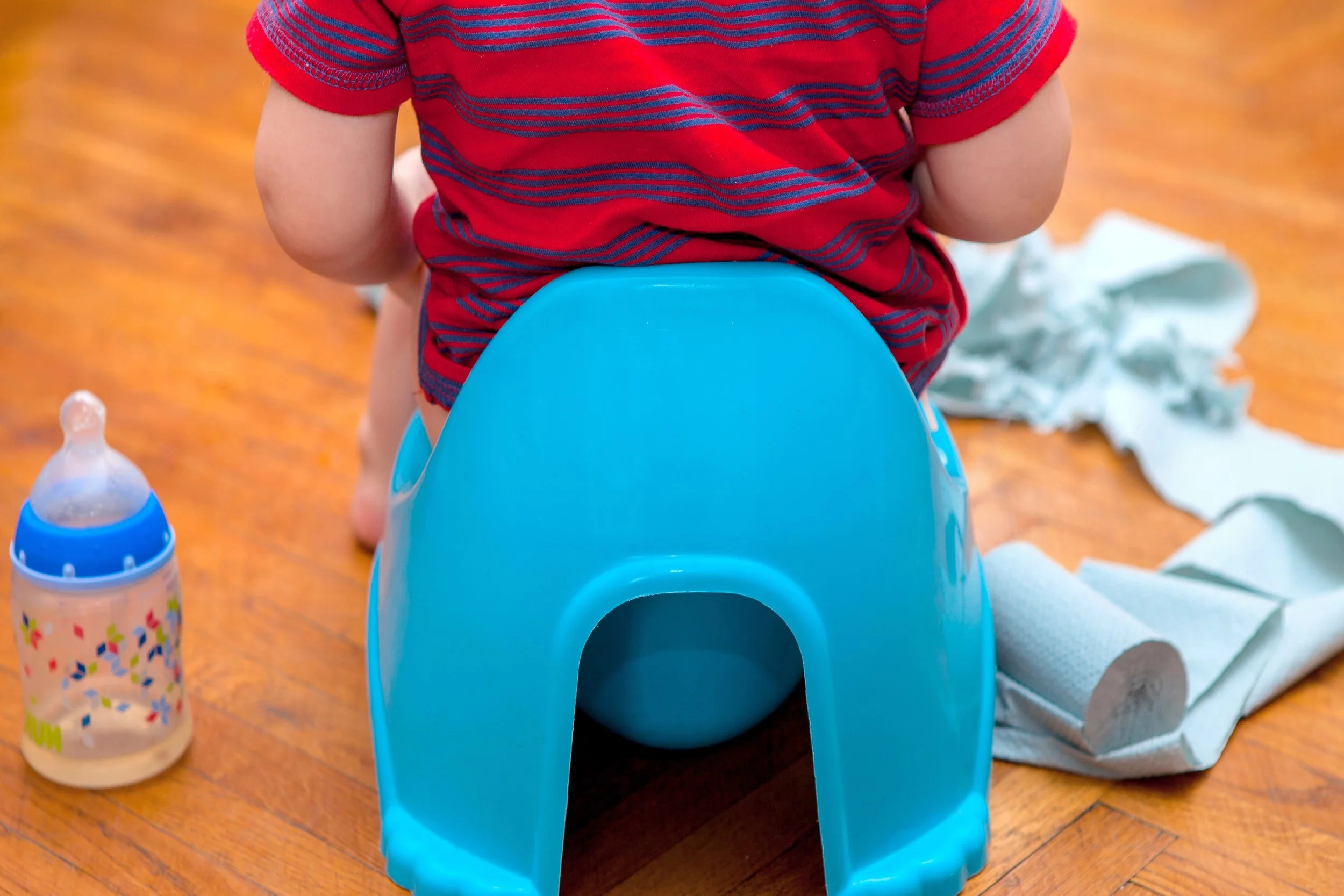
Toilet training is one of those parenting milestones that seems simple on the surface but can quickly become emotionally complicated. A child learns to use the toilet, a parent provides encouragement, and everyone moves on—right?
If only it were that easy.
For many families, toilet training becomes a place where frustration, worry, and power struggles show up. Parents come to me feeling confused and discouraged. They wonder why their child will pee on the potty but refuses to poop. They wonder why their child was doing well and suddenly starts having accidents again. They wonder why their child seems capable one day and completely resistant the next.
The first thing I tell parents is this:
Toilet training is rarely just about the potty.
It is about development, independence, control, trust, and the relationship between a child and their own body.
Around ages 2 and 3, children enter a powerful developmental stage. They are beginning to recognize that they are separate people from their parents. They have their own ideas, preferences, opinions, and desires. This process, sometimes referred to as separation-individuation, is an important part of healthy development.
Children begin to discover: I am my own person. I can make choices. I have some control.
The challenge is that toddlers actually have very little control over their lives. Parents decide when they leave the park. Parents choose what is served for dinner. Parents determine when it is time for bed, when teeth need to be brushed, and when shoes need to go on. But there is one thing children have complete ownership over: their own bodies.
This is why some of the biggest power struggles during the toddler years happen around eating, sleeping, getting dressed, bathing, and toileting. These are areas where children feel a strong sense of control.
When a child refuses to sit on the toilet, asks for a diaper to poop, or has an accident after previously being successful, it is easy to assume they are being stubborn or oppositional. But often, they are communicating something much deeper: "I need to feel in control of my body."
The Goal Is Confidence, Not Compliance
Many toilet training approaches focus on getting children to comply as quickly as possible. The goal becomes: How do we get our child to use the toilet? But I believe the bigger goal is helping children develop confidence and trust in themselves.
A child who feels pressured often becomes more resistant. The more we ask, remind, encourage, negotiate, and worry, the more emotional weight we can accidentally place on the process.
Questions like:
"Do you have to go?"
"Are you sure you don't need to try?"
"You know how to use the potty."
are understandable. We ask them because we want to help. But sometimes, our children experience those repeated reminders as pressure. And when children feel pressure around something involving their body, they may hold more tightly to their need for control. The irony is that the more we push, the harder it can become.
Fill Your Child’s Control Bank Account
One of the most effective ways to reduce power struggles around toilet training is to give children appropriate opportunities for control throughout the day. I often talk with parents about offering lots of limited choices to fill their child’s control bank account.
Toddlers need to experience autonomy. They need to feel that their opinions matter and that they have some influence over their world. This does not mean letting children run the show. Children still need limits, routines, and boundaries. It means finding small, appropriate places where they can make choices.
Would you like the blue shirt or the green shirt?
Would you like to walk to the bathroom or hop like a bunny?
Would you like to flush the toilet or wash your hands first?
Would you like to read one book or two?
The expectation remains the same, but the child gets to participate in the process. When children experience healthy control throughout the day, they often feel less need to fight for control in areas where parents cannot provide it—like toileting.
Accidents Are Information, Not Failure
One of the biggest mindset shifts parents can make is to see accidents as information rather than as failures. An accident does not mean your child is being lazy, doing it on purpose, or that all your progress has disappeared.
Instead, ask yourself:
What was happening right before the accident?
Was your child deeply focused on play?
Were they tired?
Hungry?
Going through a transition?
Starting school?
Adjusting to a new sibling?
Feeling stressed?
Children’s bodies respond to their emotional world. Big changes, stress, illness, or developmental transitions can all impact toileting. A child who has accidents after a new baby arrives, after starting preschool, or during a stressful period is not necessarily losing a skill. They may simply need additional support while they adjust.
Pooping on the Toilet Is a Different Challenge
Many parents are surprised when their child learns to pee on the toilet but refuses to poop there. This is extremely common.
Pooping requires a different level of body awareness and vulnerability. Some children are uncomfortable with the sensation. Some worry about letting go. Some become constipated after holding stool, which creates a cycle where pooping becomes even more uncomfortable and stressful.
The answer is rarely more pressure. Instead, we want to build safety and confidence.
For some children, progress may look like:
Pooping in a diaper while standing in the bathroom.
Pooping in a diaper while sitting on the toilet.
Pooping with the diaper loosened.
Eventually, using the toilet independently.
These steps may feel slow to adults, but they represent meaningful progress for a child.
Stay Calm During Accidents
How we respond to accidents matters. Children are already learning something new and navigating many emotions about independence. Shame or frustration can make the process harder.
Instead of:
"Why didn't you tell me you had to go?"
try:
"Your body had an accident. Let's get cleaned up and try again next time."
Keep it calm. Keep it neutral. You can involve your child in the cleanup process—not as a punishment, but as part of learning to care for their body. Children learn from our emotional response as much as they learn from our words. When we stay calm, we communicate: "Your body is safe. Mistakes are okay. You can keep learning."
Celebrate the Process, Not Just the Outcome
When children are learning a new skill, we want them to develop confidence in themselves.
Instead of focusing only on the result: "You used the potty! Great Job"
Try noticing the process by making an evaluation-free statement:
"You listened to your body."
"You noticed you needed to go."
"You kept trying even though it felt new."
"You were willing to sit and practice."
This helps children build an internal sense of confidence. They begin to see themselves as capable learners.
Trust Your Child’s Timeline
Toilet training is not a race. There will be children who train quickly and others who take longer. There will be children who are successful at home but struggle at school. There will be children who take steps forward and then seem to move backward. This is all part of development.
The goal is not simply to get your child out of diapers as quickly as possible. The goal is to help your child develop confidence, independence, and trust in their own body.
When parents reduce pressure, offer appropriate choices, stay calm through setbacks, and remember that toileting is connected to so much more than the toilet itself, children are much more likely to move through this stage with confidence. Because ultimately, toilet training is not just about teaching a child where to go to the bathroom. It is about helping them learn that my body belongs to me. I am capable. I am supported. And I can learn new things at my own pace.

REQUEST A FREE 20 MINUTE CONSULT CALL WITH MELISSA HERE

