As parents, it's easy to feel like we're constantly putting out fires. One child is frustrated because their sibling took their favorite toy. Someone forgot to feed the dog. Homework becomes a battle, bedtime turns into a negotiation, and before you know it, the week has flown by without anyone really slowing down to connect.
What if there was one simple habit that could reduce conflict, strengthen communication, teach your children valuable life skills, and bring your family closer together?
That's exactly why I'm such a big believer in family meetings.
A weekly family meeting gives your family something we rarely have enough of—intentional time to listen to one another, solve problems together, celebrate what's going well, and simply enjoy being together. Instead of reacting to challenges as they pop up throughout the week, family meetings create a predictable space where everyone knows they'll have a chance to be heard.
One of the things I love most about family meetings is that they communicate an incredibly powerful message to children: You are an important member of this family, and your ideas matter. Rather than parents carrying the entire burden of decision-making and problem-solving, children become active participants in creating a home that works for everyone.
Family meetings work best when everyone who lives in the home participates. That includes young children. Preschoolers may not be ready to contribute complex solutions to family challenges, but they absolutely can share something they're grateful for, give a compliment, help make simple decisions, and experience what it feels like to be an important part of the family team. If grandparents or other relatives live with you, invite them too. The more people who share in building your family culture, the stronger those connections become.
Like any family routine, consistency is key. Choose one day each week that works for your family and protect that time. Many families enjoy meeting on Sunday evenings before the week begins, but the specific day matters far less than creating a rhythm you can stick with. Sitting together around the kitchen or dining room table helps everyone stay engaged and signals that this time is special.
Giving everyone a job during the meeting also helps children feel invested. One week your oldest might serve as the chairperson, keeping the meeting moving and making sure everyone has a chance to speak. Another family member might take notes as the secretary, while someone else chooses the family game for the end of the meeting or prepares a favorite snack. Rotating responsibilities gives every child the opportunity to lead and contribute in meaningful ways.
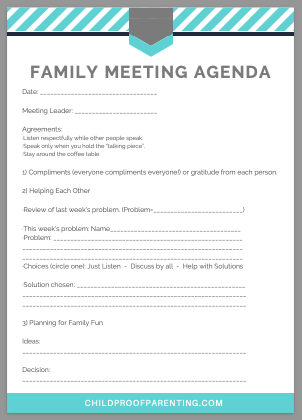
Every family meeting should begin with appreciation. Before discussing chores, sibling conflicts, or scheduling challenges, spend a few minutes recognizing the week's positive moments. Each family member takes a turn sharing something they appreciate about each person. It might be as simple as, "Thank you for helping me clean up after dinner," or "I loved how you made me laugh this week."
When someone receives a compliment, their only job is to smile and say, "Thank you."
That simple exchange teaches children two important skills that don't always come naturally: how to genuinely appreciate others and how to receive kindness without brushing it aside. If compliments feel awkward at first, don't worry. Parents can model what appreciation sounds like until everyone becomes more comfortable. Some families also enjoy sharing what they're grateful for instead of compliments, which creates a similar positive tone.
After everyone has had a chance to share their appreciations, it's time to move on to problem-solving. One of the biggest mistakes families make is trying to solve problems in the middle of an emotional moment. Family meetings create an alternative. Throughout the week, keep a notebook, clipboard, or whiteboard in a central place where anyone can write down topics they'd like to discuss. Maybe it's a disagreement about chores, a sibling conflict, or a request for more one-on-one time with a parent. Knowing there will be a designated time to discuss concerns helps children feel heard, while also preventing parents from getting pulled into endless negotiations during stressful moments.
During the meeting, begin by allowing everyone involved to explain the problem without interruption. This isn't about deciding who's right or wrong. It's about making sure everyone feels heard and understood. Once everyone has shared their perspective, invite the family to brainstorm possible solutions. At this stage, there are no bad ideas. Write them all down before evaluating them together.
As you review each idea, ask one simple question: Is this solution helpful or hurtful? Does it respect everyone involved? Is it realistic? Will it actually solve the problem? This process teaches children empathy, perspective-taking, and critical thinking while showing them that disagreements don't have to end with someone "winning." The goal is to find a solution everyone is willing to try. If no agreement can be reached, that's okay. Sometimes the best solution is to revisit the conversation at next week's meeting after everyone has had more time to think.
Family meetings are also the perfect opportunity to plan ahead. You can talk about upcoming vacations, weekend activities, school events, meal planning, or changes in everyone's schedule. When children have a voice in family decisions, they're much more likely to cooperate because they helped create the plan.
Perhaps the most important part of every family meeting is how it ends.
No matter how challenging the conversations may have been, always finish with something fun. Play a quick game, enjoy dessert together, watch a funny video, or share a favorite snack. Ending on a positive note reminds everyone that families can disagree, work through difficult situations, and still enjoy being together afterward. That's an incredibly valuable lesson for children to experience.
If you're new to family meetings, remember that they don't have to be perfect. The first few might feel awkward, and that's completely normal. Like any new family tradition, it takes time to build comfort and consistency. Keep your expectations realistic, celebrate small successes, and focus on creating a space where every member of your family feels respected and heard.
Over time, you'll likely notice something remarkable. Your children become better listeners. They begin generating their own solutions instead of expecting adults to fix every problem. They feel more connected to one another and to you. Most importantly, they begin to understand that being part of a family means working together—not because someone is forcing them to, but because every person's voice matters.
In a world that often feels rushed and reactive, a weekly family meeting offers something truly meaningful: the chance to slow down, reconnect, and remind each other that you're all on the same team. And sometimes, one intentional conversation each week can change the entire tone of your home.