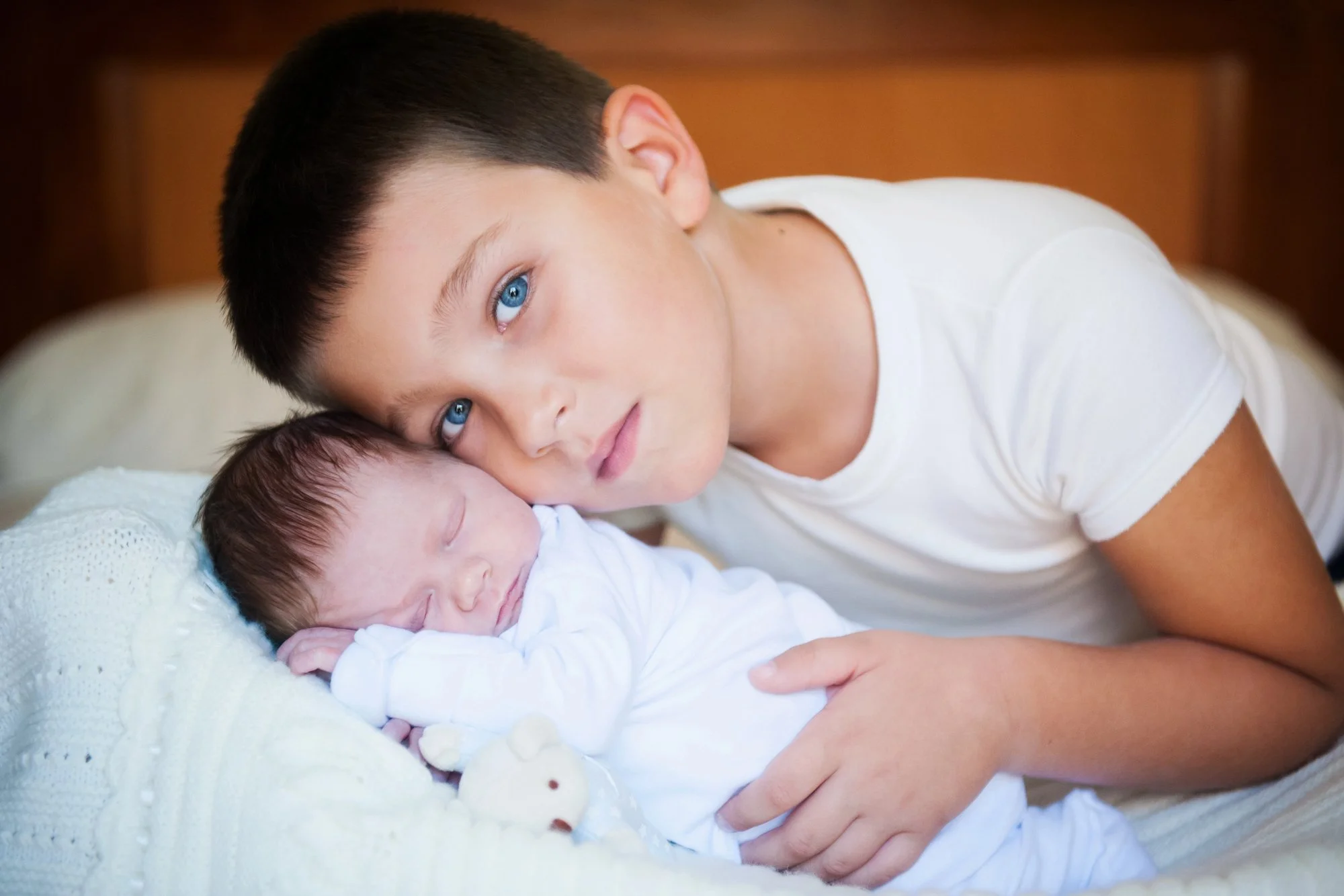
Bringing home a new baby is often imagined as a joyful, bonding moment for the whole family. And while it is deeply meaningful, it can also stir up unexpected emotions—especially for older siblings. Many parents are surprised when their once-easygoing toddler suddenly becomes clingy, defiant, or even regresses. A child who was fully potty trained may start having accidents, or a preschooler who once loved school may suddenly resist going. These reactions can feel confusing, even discouraging, during what is “supposed” to be a happy time.
In reality, these responses are incredibly common. For an older child, the arrival of a new baby can feel like a major disruption. From their perspective, the baby receives constant attention, special treatment, gifts, and visitors. It can leave them feeling displaced, frustrated, or even a little unloved. At the heart of it, most children are grappling with a very human feeling: they don’t want to share their parents’ time and affection.
These emotions often show up in predictable ways. Many children increase their bids for attention—wanting to be held more, interrupting frequently, or demanding help with things they used to do independently. Others may regress, returning to behaviors like thumb-sucking or toileting accidents. Some children express their feelings more directly through anger or rough behavior, especially toward the baby. These reactions are most common in children ages one to three but can certainly appear in older kids as well.
Preparation can go a long way in easing this transition. Before the baby arrives, involving your older child helps them feel included rather than replaced. Talking about the pregnancy, letting them feel the baby move, and inviting them to help prepare the nursery can build connection. Looking through photos of their own babyhood and referring to the new addition as “our baby” reinforces their important role in the family.
After the baby arrives, small, thoughtful gestures matter. If possible, connect with your older child while you’re still in the hospital and prioritize time with them when you return home. Some families find it helpful to give a “big sibling gift” or to encourage visitors to acknowledge the older child with equal enthusiasm. These moments can soften feelings of being overlooked.
As your family settles into its new rhythm, one of the most powerful tools is dedicated one-on-one time. Even 20–30 minutes a day of focused, uninterrupted connection with your older child can make a meaningful difference. This time reassures them that they still have a secure place with you.
It’s also important to welcome their feelings—even the hard ones. Let them know it’s okay to feel mad, sad, or frustrated about the baby, while still holding clear boundaries around behavior. For example, “It’s okay to feel angry, but it’s not okay to hurt the baby. When you feel upset, you can come to me for a hug.”
Finally, look for opportunities to notice and encourage positive interactions. When your child is gentle, helpful, or engaged with the baby, reflect it back: “I saw how softly you touched her—she loves that.” Inviting your child into small caregiving roles can build pride and connection.
Every child adjusts in their own way and on their own timeline. With patience, empathy, and intentional connection, most families find their footing—and often discover a beautiful new bond growing between siblings.